Return grilles are easy to overlook until they interrupt an otherwise carefully finished wall or ceiling. Thoughtful return grille upgrade ideas can make HVAC openings feel intentional by improving proportions, material choices, placement, and visual alignment without restricting the airflow the system needs.
Choose a Grille That Matches the Architecture
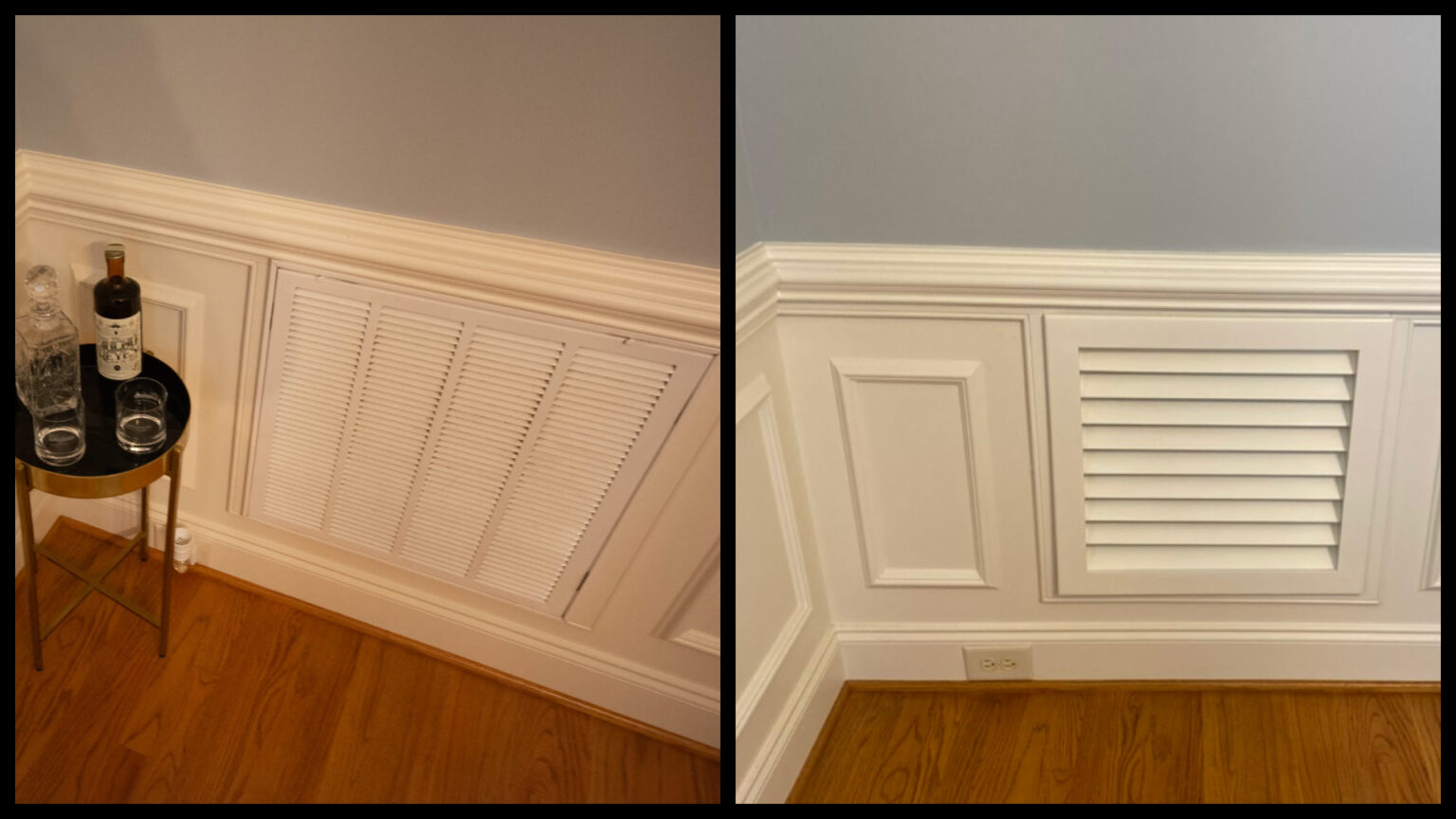
Standard stamped-metal grilles work, but their heavy borders and closely spaced slats can look out of place in refined rooms. Linear bar grilles, narrow-frame models, and flush designs create a quieter appearance.
The right option depends on the surrounding architecture. Homes with crisp millwork often benefit from simple rectangular profiles, while rooms with traditional detailing may look better with a subtly framed grille. Browsing broader architectural inspiration can also help clarify which shapes feel consistent with the room rather than added afterward.
Pay Attention to Proportion and Alignment
A grille can look awkward even when the product itself is attractive. Problems often come from poor alignment with nearby doors, cabinets, windows, or ceiling features.
Whenever possible, center the grille within a defined wall area or align its edges with another strong architectural line. These small relationships matter because the eye naturally compares nearby edges.
| Design Choice | Visual Effect | Practical Note |
|---|---|---|
| Narrow border | Cleaner outline | Works well on open walls |
| Linear slots | Modern appearance | Check airflow requirements |
| Flush mounting | Minimal interruption | May require careful installation |
| Painted finish | Better wall integration | Use suitable metal coating |
Make the Finish Part of the Room
Bright white isn’t always the best grille color. A contrasting grille can draw attention toward something that should normally remain secondary.
Matching the grille closely to the wall or ceiling helps it recede. In spaces where metal finishes are already prominent, a coordinated black, bronze, or brushed-metal grille can become an intentional detail instead. Looking through residential design references may provide useful ideas for coordinating small functional components with larger finishes.
Paint should never clog louvers or reduce the open area. If a grille is being refinished, thin coats and careful preparation usually produce a cleaner result.
Consider Better Placement During Renovations
Major remodeling creates opportunities that simple grille replacement doesn’t. A return opening may sometimes be relocated to improve symmetry, clear built-ins, or reduce visual clutter, provided the HVAC system still receives adequate return airflow.
This is where appearance has to remain secondary to mechanical performance. Return ducts help move air back toward the system, so reducing opening size or blocking the pathway can create unwanted pressure problems. Wider exterior and interior ideas can inspire cleaner layouts, but HVAC changes should still be evaluated practically.
Coordinate With Nearby Millwork
Built-ins and wall paneling can make return grilles more noticeable because their geometry becomes stricter. Planning the grille before cabinetry or trim is installed can prevent awkward cutouts later.
Common Return Grille Upgrade Mistakes
The biggest mistake is choosing a grille purely for appearance. Decorative patterns with too little open area can restrict airflow, while undersized replacements may create noise or reduce system performance.
Another problem is disguising the grille behind furniture, curtains, or cabinetry. A visually hidden return isn’t an improvement if airflow suffers. The cleaner strategy is usually to make the grille visually compatible with the room instead of trying to make it inaccessible.
Frequently Asked Questions
Can a return grille be painted the same color as the wall?
Yes. Many metal grilles can be painted after proper cleaning and preparation. Apply light coats so the finish doesn’t bridge across openings or interfere with airflow.
Are linear return grilles better than standard grilles?
They can create a cleaner architectural look, but appearance alone doesn’t make them better. The grille still needs enough open area for the HVAC system’s airflow requirements.
Can I make a return grille smaller?
Reducing the opening without checking the HVAC requirements can increase restriction. If you want a smaller-looking return, ask an HVAC professional whether another grille size or configuration can provide adequate free area.
Make the Functional Detail Feel Intentional
A successful return grille upgrade doesn’t need to make the vent disappear completely. It should simply stop competing with the architecture. Start with correct airflow requirements, then choose proportions, mounting style, and finishes that relate naturally to surrounding details. Small mechanical elements become far less distracting when they share the same visual logic as the room.