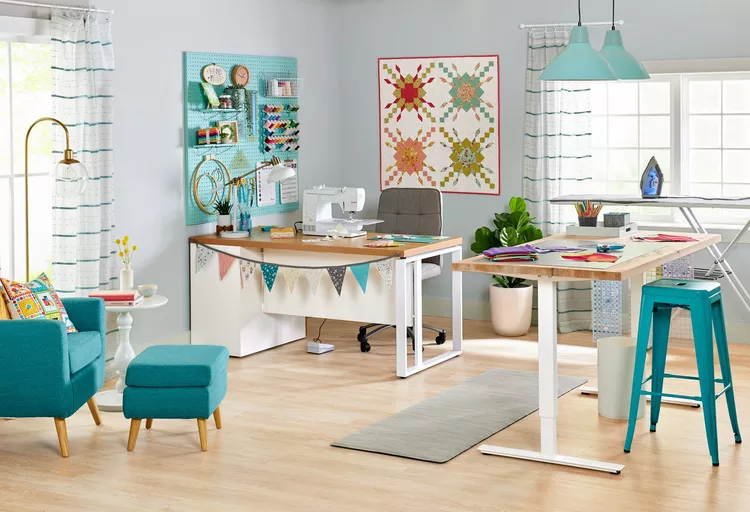
A sewing room works best when the layout follows the actual order of a project: choose fabric, cut pieces, sew, press, and store unfinished work. Good sewing room ideas for machines, fabric, and pattern storage keep those steps close together while preventing thread, tools, and folded textiles from taking over every surface.
Build the Room Around Your Sewing Machine
Start by giving the sewing machine a permanent working position rather than treating it like something that must be packed away after every session. A sturdy table at a comfortable height reduces vibration and leaves space for fabric to move behind the machine.
Natural light is useful, but position the machine so direct sunlight doesn’t create glare. While gathering ideas from home inspiration pages or magazines, pay close attention to task lighting rather than decorative fixtures alone.
Leave Room for Fabric Movement
Large pieces of fabric need clearance on the left side and behind the machine. A narrow desk pushed tightly against a wall may look tidy but can become frustrating when sewing curtains, quilts, or garments.
Create Fabric Storage You Can Actually Maintain
Fabric is easiest to use when you can see what you own. Open shelving, labeled bins, shallow drawers, or fabric wrapped around uniform boards all work, depending on how large the collection is.
Color sorting looks attractive, but sorting by material or project type can be more practical. Someone who regularly works with quilting cotton, denim, and upholstery fabric benefits from separating those groups before worrying about color.
Design references from residential style resources can inspire attractive storage arrangements, but sewing rooms need to remain functional first. Beautiful open shelves become inconvenient if every piece must be removed to reach the fabric behind it.
| Storage Need | Practical Choice | Main Benefit |
|---|---|---|
| Folded fabric | Shelves or cubbies | Easy visibility |
| Small remnants | Clear labeled bins | Prevents loose piles |
| Thread and notions | Shallow drawers | Fast access |
| Current projects | Individual baskets | Keeps pieces together |
Give Patterns and Notions Dedicated Zones
Paper patterns become messy quickly because envelopes, traced pieces, instructions, and templates have different sizes. File drawers, magazine holders, expanding folders, or labeled boxes can keep each pattern together without folding large pieces repeatedly.
Smaller tools deserve equally deliberate storage. Scissors, measuring tapes, marking tools, pins, needles, rotary cutters, and spare machine feet should have assigned places near the work area.
Some people collect room-planning references from online design collections before choosing cabinets and organizers. That can help with visual direction, but measure your actual supplies first so storage isn’t based only on appearance.
Make Cutting and Pressing Easier
A separate cutting surface changes how comfortable a sewing room feels. It should be large enough for common projects and high enough that you don’t spend long periods bending over.
If space is tight, consider a folding table, drop-leaf surface, or rolling island that can be moved when needed. An ironing board or compact pressing station should sit nearby without blocking the main walking path.
Wall-mounted rulers, pegboards, magnetic strips for suitable metal tools, and narrow shelves can move frequently used equipment off the table. Vertical storage is especially valuable in a small sewing room.
Common Sewing Room Mistakes to Avoid
Adding more cabinets isn’t always the answer. Deep cupboards can hide fabric so effectively that forgotten material gets purchased twice. Oversized furniture can also leave too little room to handle large projects comfortably.
Another mistake is storing everything by appearance rather than frequency of use. Everyday scissors and thread shouldn’t require opening several boxes, while specialty tools used twice a year don’t need prime desk space. Let convenience determine the closest storage positions.
Frequently Asked Questions
How much table space does a sewing machine need?
The machine itself may fit on a compact desk, but extra space on both sides is useful for guiding fabric. Larger sewing projects benefit from a deeper surface that supports material instead of letting it pull downward.
What is the best way to store sewing patterns?
File drawers, labeled envelopes, magazine holders, and expanding folders all work well. Choose a method that keeps instructions and pattern pieces together and allows you to locate designs without opening every container.
How can I organize a small sewing room?
Use vertical walls, shallow drawers, rolling carts, and furniture with more than one function. Keep frequently used supplies near the machine while moving seasonal fabric and specialty equipment to higher or less accessible storage.
Make Every Work Zone Earn Its Space
The strongest sewing rooms aren’t necessarily the largest. They simply reduce unnecessary movement and give fabric, patterns, tools, and active projects predictable homes. Arrange the machine first, build storage around your actual habits, and keep the cutting and pressing zones easy to reach. A room designed around the way you sew will stay organized far longer than one designed only to look organized.