
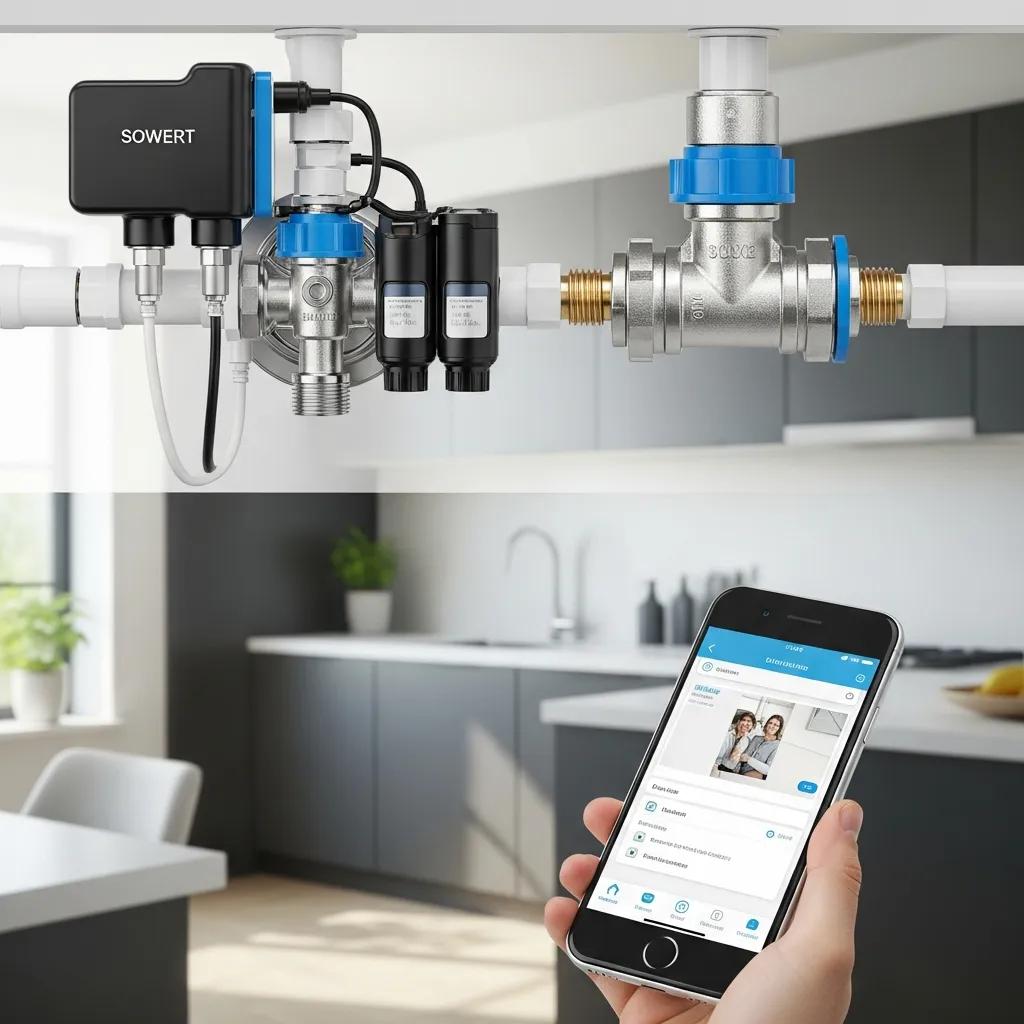
A burst supply line or failed appliance hose can release water long before anyone notices the problem. Smart valve ideas focus on detecting unusual flow and automatically shutting off the main water supply, helping limit damage while the house is empty or everyone is asleep.
The right setup depends on pipe size, valve location, sensor placement, and how much automation you actually want.
How Smart Water Shutoff Valves Work
Most whole-house smart valves monitor water movement through the main supply line. Depending on the design, the system may track flow rate, duration, pressure patterns, or input from wireless leak sensors.
Automatic Shutoff Adds the Real Protection
A leak detector that only sends a phone notification still depends on someone responding quickly. An automatic shutoff valve can physically stop incoming water once the system identifies a major problem.
That distinction matters during vacations, workdays, and overnight leaks.
Put Protection Near High-Risk Plumbing Areas
Wireless sensors can extend protection beyond the main valve by watching areas where small failures often begin. Good locations include beneath sinks, beside washing machines, near water heaters, around refrigerators with water lines, and beneath mechanical equipment.
People coordinating valve installation with broader renovation work may also gather wall finish ideas while deciding how pipes, controls, and service points should fit into completed rooms.
Keep sensors where water would reach them early rather than hiding them on a shelf above the likely leak path.
Decide Between Whole-House and Zone Control
A main-line valve offers broad protection because it can stop water entering the entire house. Zone valves provide more targeted control and may make sense in larger homes, accessory units, workshops, or areas with separate plumbing branches.
Homeowners comparing plumbing work with surrounding finishes sometimes review interior planning ideas before deciding whether controls should remain visible or sit inside an accessible cabinet.
| Setup | Main Benefit | Possible Limitation |
|---|---|---|
| Main shutoff valve | Protects most plumbing | Stops water everywhere |
| Zone valve | Isolates one area | Requires more planning |
| Leak sensors | Detect localized water | Coverage depends on placement |
| App-connected valve | Remote control | May depend on power or connectivity |
Plan for Power, Internet, and Manual Operation
A smart valve should still make sense when the technology around it fails. Check whether the unit includes battery backup, local controls, and a clear manual-open procedure.
Some homeowners combine plumbing improvements with other home comfort ideas so shutoff equipment is planned alongside utility-room storage and maintenance access rather than added as an afterthought.
A conveniently mounted controller is also easier to inspect than one buried behind boxes or fixed cabinetry.
Where Smart Valve Planning Goes Wrong
The biggest mistake is treating every unusual flow event as a catastrophic leak. Irrigation, filling a bathtub, guests taking consecutive showers, or another high-use event can resemble abnormal consumption to some systems.
Poor sensor placement creates another weakness. Installing expensive automation does little good if water must spread across the floor before reaching a detector. Settings should match normal household habits, and occupants should know how to reopen the valve after a confirmed false alarm.
Frequently Asked Questions
Can a smart valve shut off water without anyone being home?
Many automatic systems can close the main valve after detecting a flow pattern or leak-sensor alert that meets their configured rules. Exact behavior varies by model and installation.
Where should a whole-house smart valve be installed?
It is normally fitted on the main incoming water line where the valve and controller remain accessible for service, testing, and manual operation.
Are smart leak sensors still useful with an automatic valve?
Yes. Point sensors can detect water beneath appliances or fixtures before a whole-house system identifies an unusual volume of water use.
Make Leak Protection Part of Routine Maintenance
A smart valve works best as one layer of a broader leak-prevention plan. Keep supply hoses in good condition, inspect water heaters and fixture connections, test sensors periodically, and make sure household members understand the manual shutoff.
Automatic protection cannot prevent every plumbing failure, but thoughtful placement and regular testing can greatly reduce the amount of water released before someone responds.


