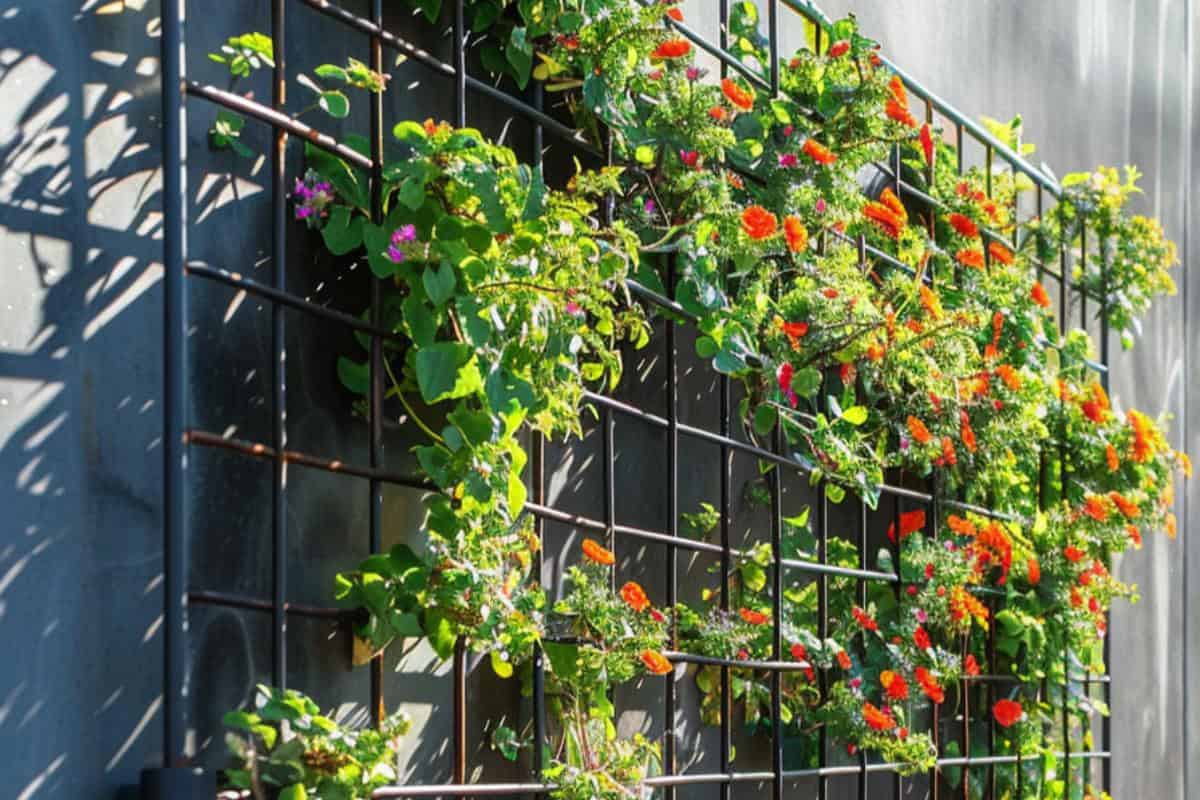
A trellis wall can turn an exposed patio, narrow side yard, or plain fence line into a greener, more private outdoor space. The best trellis wall ideas balance plant support with airflow, maintenance access, and the amount of privacy you actually need. A good design feels integrated with the landscape rather than added as an afterthought.
Start With the Right Trellis Structure
Wood lattice gives gardens a warm, traditional appearance, while metal grids create a cleaner look and often handle heavier vines well. Freestanding panels are useful where attaching a structure to a fence or exterior wall isn’t practical.
Leave enough space behind a wall-mounted trellis for vines to grow without trapping moisture against siding. Homeowners collecting broader outdoor living inspiration can also use trellises to visually separate planting zones from patios or recreational areas.
Match Strength to the Plant
Light annual climbers need little support. Mature wisteria, grapevines, and other woody plants can become surprisingly heavy, so posts, anchors, and crosspieces should be chosen with their eventual load in mind.
Use Plant Coverage to Control Privacy
You don’t need a completely solid wall to make a sitting area feel sheltered. A combination of narrow trellis openings and leafy growth can interrupt sight lines while still allowing wind through.
For spaces designed around a relaxed retreat atmosphere, ideas drawn from comfortable outdoor settings may help when choosing seating, greenery, and screening as one coordinated composition.
| Trellis Approach | Privacy Level | Good Fit |
|---|---|---|
| Open wire grid | Light | Small climbers |
| Wood lattice | Medium | Patios and fences |
| Layered panels | High | Exposed seating |
| Freestanding frame | Flexible | Rental-friendly yards |
Position the Trellis Where Privacy Matters Most
Before building a long screen, stand in the yard and identify the actual viewing angles. You may discover that one six-foot panel beside a dining table does more useful work than screening the full property line.
Trellises can also soften boundaries around rental homes, investment properties, and backyard upgrades discussed through broader property improvement ideas. The key is keeping the structure proportional to the home and available yard space.
Common Trellis Design Mistakes
One mistake is planting an aggressive vine before considering how it will be pruned five years later. Growth can reach gutters, roof edges, neighboring fences, and utility lines if the structure sits too close to them.
Another problem is creating such dense foliage that airflow disappears. Privacy doesn’t require a solid mass of leaves. Selective pruning often produces a healthier plant and a more attractive screen.
Frequently Asked Questions
How tall should an outdoor privacy trellis be?
The useful height depends on the sight line you’re trying to block. A seated patio may need less screening than an area overlooked from a neighboring upper floor. Check local fence or structure rules before installing tall permanent panels.
What climbing plants work well on a trellis?
Clematis, jasmine, climbing roses, honeysuckle, and many annual vines can work well, depending on climate and sunlight. Match the plant’s mature weight and growth habit to the strength of the trellis.
Can a trellis stand without attaching to a fence?
Yes. A freestanding trellis can be supported by posts anchored securely in the ground or suitable bases. It should resist wind loads, especially after mature plants increase the surface area exposed to gusts.
Build Privacy That Still Feels Open
A successful trellis wall blocks the views that bother you without making the yard feel boxed in. Start with sight lines, choose a structure strong enough for the plant, and leave room for pruning and airflow. When the frame and greenery are planned together, the screen becomes part of the garden instead of looking like a temporary barrier.