
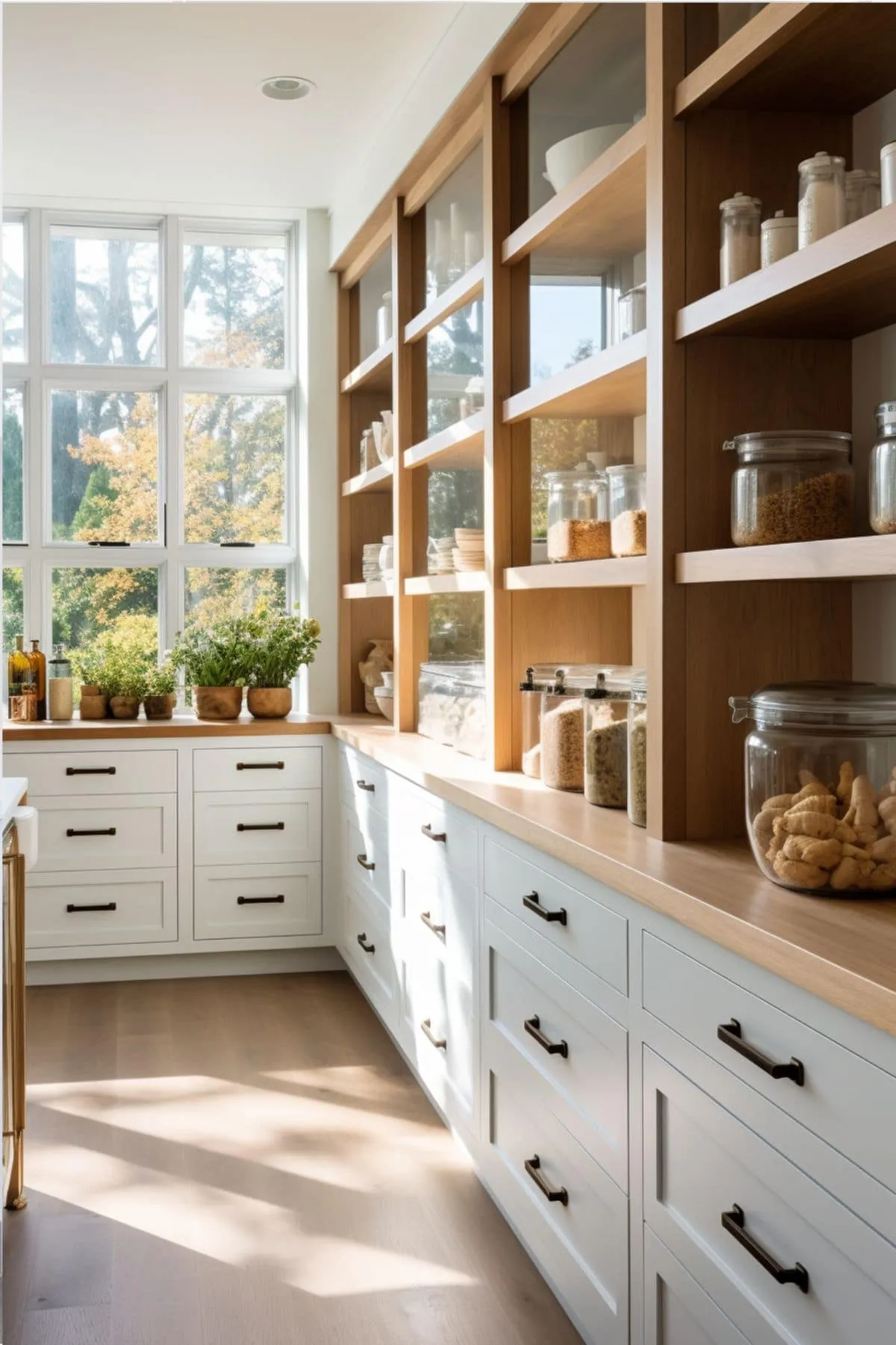
A pantry works better when everyday food can be seen, reached, and returned without awkward stretching or constant rearranging. Accessible pantry ideas focus less on packing every inch with storage and more on making useful items easy to reach. Good shelf heights, shallow storage, clear lighting, and simple organization can make a surprisingly large difference.
Start With the Most Comfortable Reach Zone
Frequently used groceries should sit between comfortable waist and shoulder height whenever possible. Heavy containers belong lower, but not so low that retrieving them requires deep bending or kneeling.
Reserve the highest shelves for lightweight items used occasionally. If you’re collecting home layout inspiration while planning the room, compare ideas against the way the pantry will actually be used rather than choosing storage based only on appearance.
Keep Everyday Items Close to the Front
Deep shelves often look generous but allow small packages to disappear behind larger containers. Shallow shelving, pull-out trays, or tiered organizers make contents easier to identify.
The goal isn’t to display everything perfectly. It’s to reduce searching and unnecessary reaching.
Improve Visibility Before Adding More Storage
Good lighting can make an ordinary pantry substantially easier to use. Ceiling fixtures may leave shadows beneath shelves, so LED strips or other low-profile task lighting can help illuminate darker levels.
When considering broader space planning, pay attention to sightlines as much as storage capacity. A pantry that holds fewer items but lets you identify them quickly can be more functional than a crowded room with extra shelving.
| Pantry Feature | Useful Approach | Main Benefit |
|---|---|---|
| Everyday shelves | Mid-level placement | Easier reach |
| Deep storage | Pull-out trays | Better visibility |
| Lighting | Shelf-level illumination | Fewer dark corners |
| Containers | Large readable labels | Faster identification |
Use Pull-Out Storage Where Depth Creates Problems
Full-extension drawers and pull-out pantry shelves bring stored items toward the user instead of requiring the user to reach into the back of a cabinet. They can be especially helpful for cans, jars, baking ingredients, and small appliances.
Materials and hardware also affect usability. General visual design cues may help with finishes and overall style, but smooth drawer travel, sturdy handles, and clear access deserve equal attention.
Leave Turning and Standing Space
Storage shouldn’t project so far into the pantry that movement becomes difficult. A little open floor area can make carrying groceries, turning around, or using a step-free access route much easier.
Door swing matters too. Pocket doors, sliding doors, or outward-opening arrangements may work better where a standard inward-swinging door blocks shelves or circulation.
What People Often Get Wrong
One common mistake is assuming that accessibility means putting everything lower. That can simply move the problem from excessive reaching to excessive bending.
Another problem is over-organizing. Dozens of tiny containers may look neat but create extra handling and make labels harder to read. Comfortable pantry design usually comes from a few deliberate changes: useful shelf heights, clear visibility, uncomplicated storage, and enough open space to move.
Frequently Asked Questions
How deep should accessible pantry shelves be?
Shallower shelves often make small items easier to see and reach. Deeper shelving can still work well when paired with pull-out trays, baskets, or drawers that bring stored items forward.
Are clear containers better for pantry accessibility?
They can help because contents are visible without opening each container. Large labels remain useful, especially for similar-looking foods, expiration tracking, or users who prefer quick visual identification.
Can an existing pantry be made easier to use?
Yes. Moving frequently used items, adding brighter lighting, installing pull-out organizers, enlarging labels, and reducing clutter can improve accessibility without rebuilding the entire pantry.
Make Daily Storage Easier
A comfortable pantry should reduce effort during ordinary routines, not create another storage puzzle. Keep frequent items within an easy reach zone, improve lighting, and use pull-outs where shelf depth becomes inconvenient. Small adjustments often matter more than adding another row of cabinets, because the best pantry storage is the storage people can actually see and use.


